EA Play Franchise Integration
This design case is from my experience at
Electronic Arts
Role
Solo Experience Designer & Front-End Developer
Industry
Gaming
Active team
Date
2023
Outcome

Bringing consistency to a global subscription experience
EA Play is embedded across dozens of franchise websites, marketing hubs, and acquisition entry points. Over time, each page evolved independently, owned by different teams and optimized for different goals. Messaging varied widely, sometimes disrupting the primary purchase flow, sometimes detached from it entirely. This project focused on designing a cohesive, scalable integration system that clarified EA Play’s value, reduced friction across user journeys, and supported sustainable subscription growth across both Basic and Pro tiers. Without compromising the primary purpose of franchise pages: helping players confidently purchase games.
My role
I led the project end to end, owning UX strategy, interaction design, visual systems, and front-end implementation. I defined the EA Play experience across franchise pages using journey mapping and conversion analysis. I built a modular, scalable component system adaptable to multiple titles and lifecycle states, and ensured production fidelity through direct front-end execution. This integrated ownership accelerated iteration and aligned strategy with shipped experience.
Collaboration
The work required close alignment across Marketing, SEO, Engineering, Producers, and QA. I partnered with Marketing to refine messaging and CTA hierarchy, and with SEO to balance discoverability with strong information architecture. I worked with Engineering and AEM stakeholders to validate lifecycle logic and technical constraints. By translating business goals into reusable UX patterns, I created shared clarity and enabled teams to move efficiently and confidently.
Tools & methods
I applied systems thinking and user-centered design throughout the process, from whiteboarding and journey mapping to wireframes and scalable component libraries. I built responsive interfaces using HTML5, SCSS, and JavaScript, prioritizing performance and maintainability. Within AEM, I structured lifecycle-based conditionals for dynamic content. All components were designed to meet WCAG accessibility standards and support long-term scalability.
The challenge
EA Play integration was inconsistent across franchise pages. In some cases, it disrupted purchase flow; in others, it appeared as a separate promotional block rather than a contextual option. Messaging alternated between benefit-heavy framing and transactional intent, creating confusion about its role within the ecosystem. The core challenge was designing a unified yet flexible system that could scale across franchises, user states, platforms, and lifecycle stages — without becoming rigid, redundant, or costly to maintain.
The process
Research & ideation
Due to timeline and scale constraints, I leveraged existing analytics, prior research, competitive benchmarking, and stakeholder insights rather than conducting new interviews. I analyzed EA Play entry points across marketing and franchise pages, evaluated user intent differences, and benchmarked subscription integrations across the gaming industry. These insights surfaced fragmentation in messaging and intent alignment, guiding the design of a scalable system that supported multiple user states without requiring one-off solutions.
Exploration & conceptualization
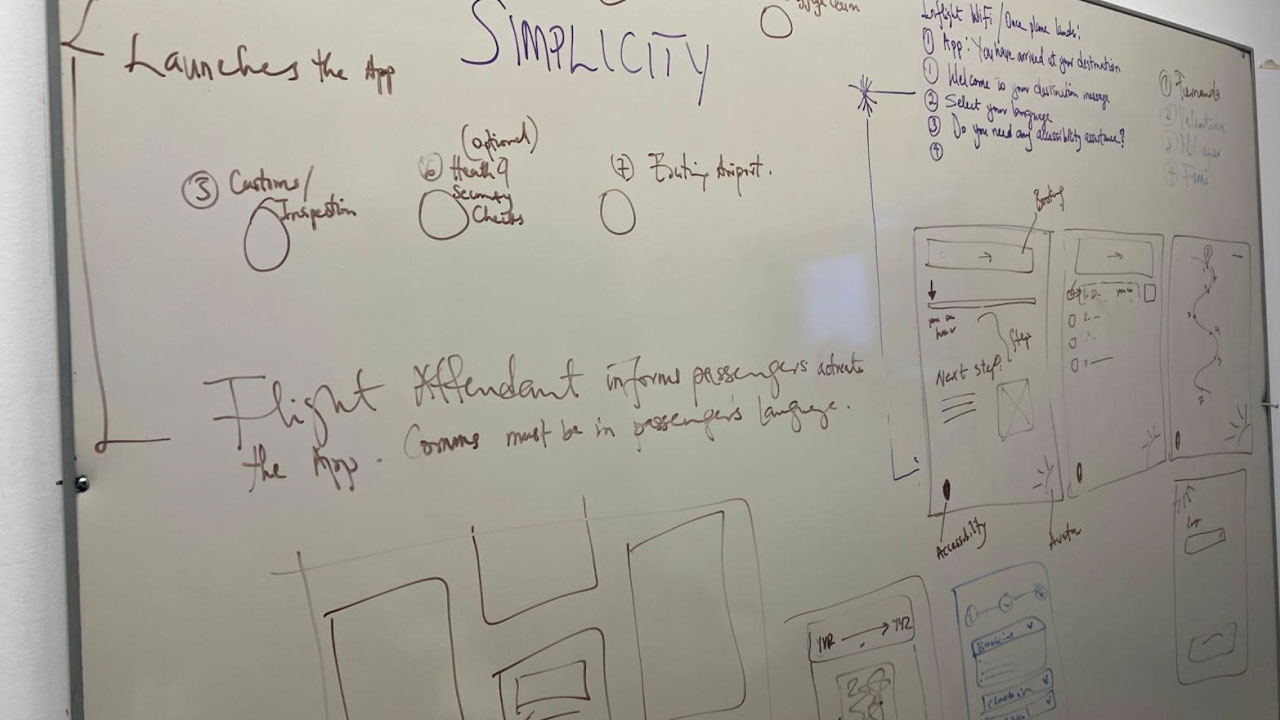
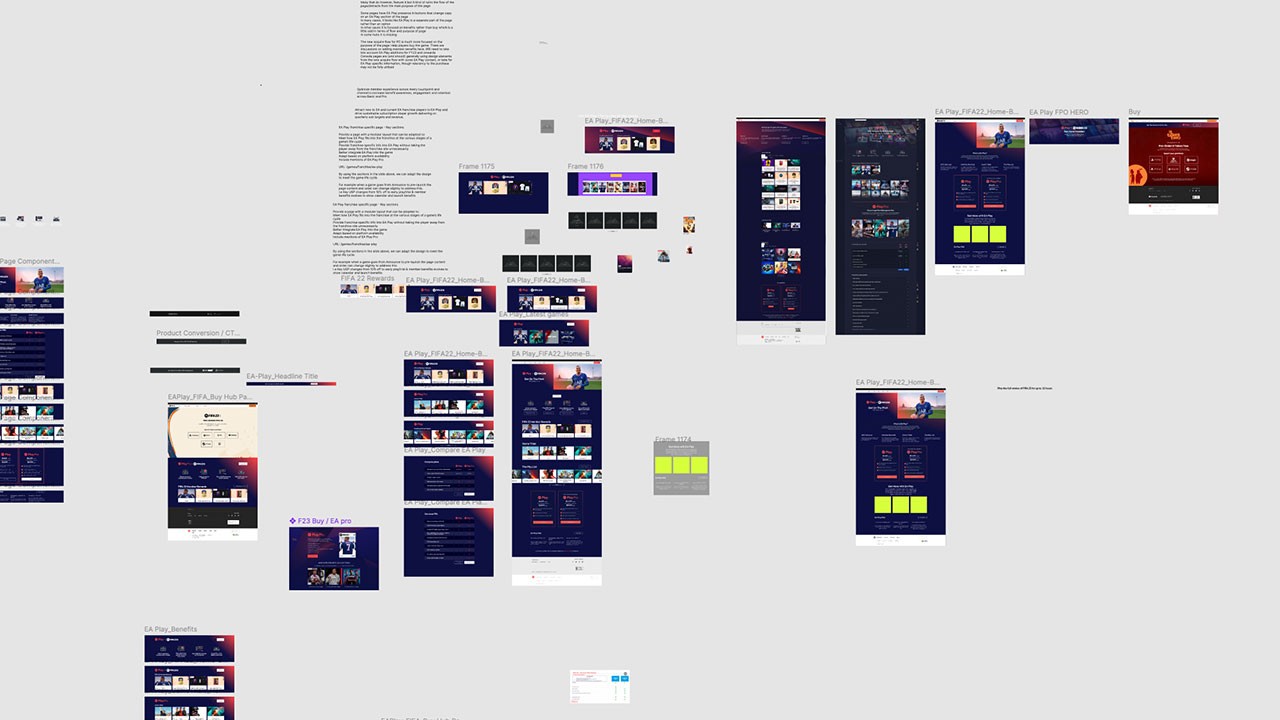
I began with whiteboard sketches and low-fidelity wireframes to test modular layouts and content hierarchies. Early exploration focused on reusable content blocks, benefit prioritization, and entry-point flexibility, ensuring clarity regardless of where users entered the journey. Rather than designing isolated pages, I translated these explorations into a component-based framework that could adapt across franchises and lifecycle stages.
Iteration & refinement
Designs evolved through cross-functional reviews, QA validation of lifecycle logic, responsive testing, and accessibility audits. Iterations focused on improving value clarity, reducing cognitive load, and ensuring predictable behavior across breakpoints and conditional states. Each refinement strengthened system consistency while reinforcing technical feasibility within AEM.
Delivery & implementation
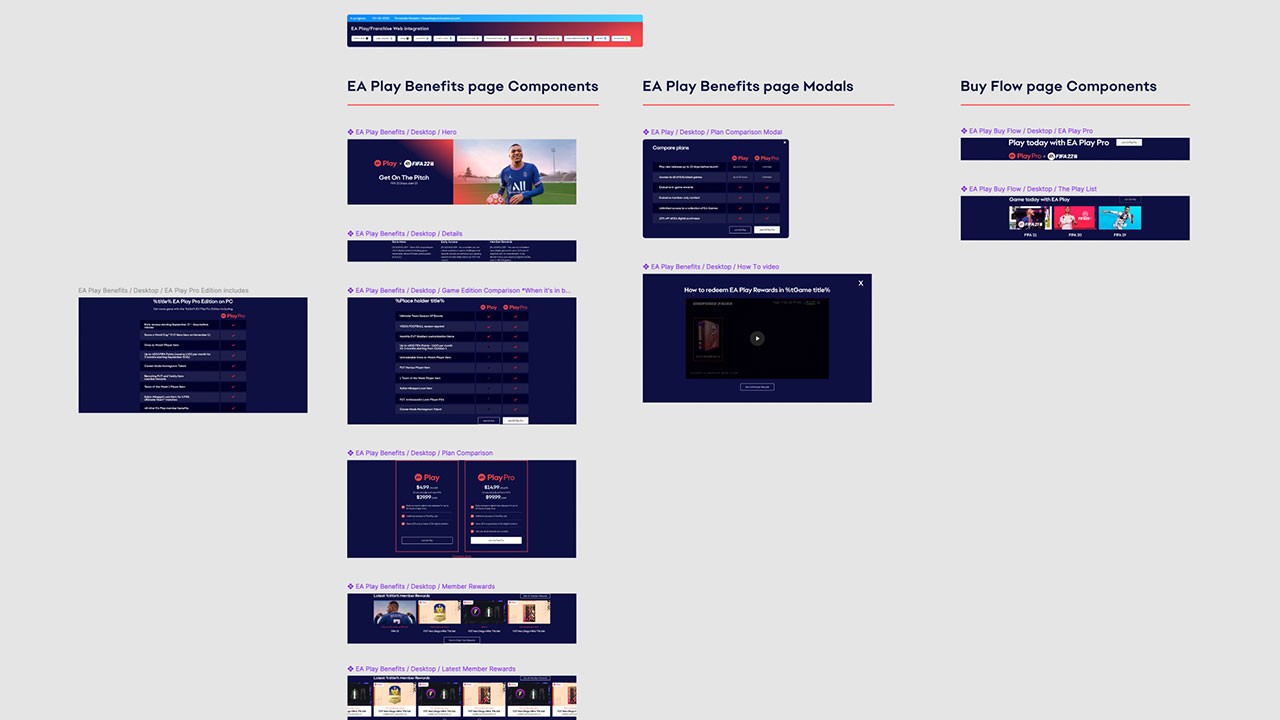
I led implementation directly to ensure fidelity and scalability. I built modular templates using HTML, SCSS, and JavaScript, and implemented AEM conditionals to dynamically adapt content based on lifecycle stage and membership tier. I also created documentation and usage rules to enable safe reuse across franchise teams. The rollout integrated seamlessly across hubs without requiring redesign per title, reducing ongoing design dependency and accelerating future updates.
Visual work & highlights
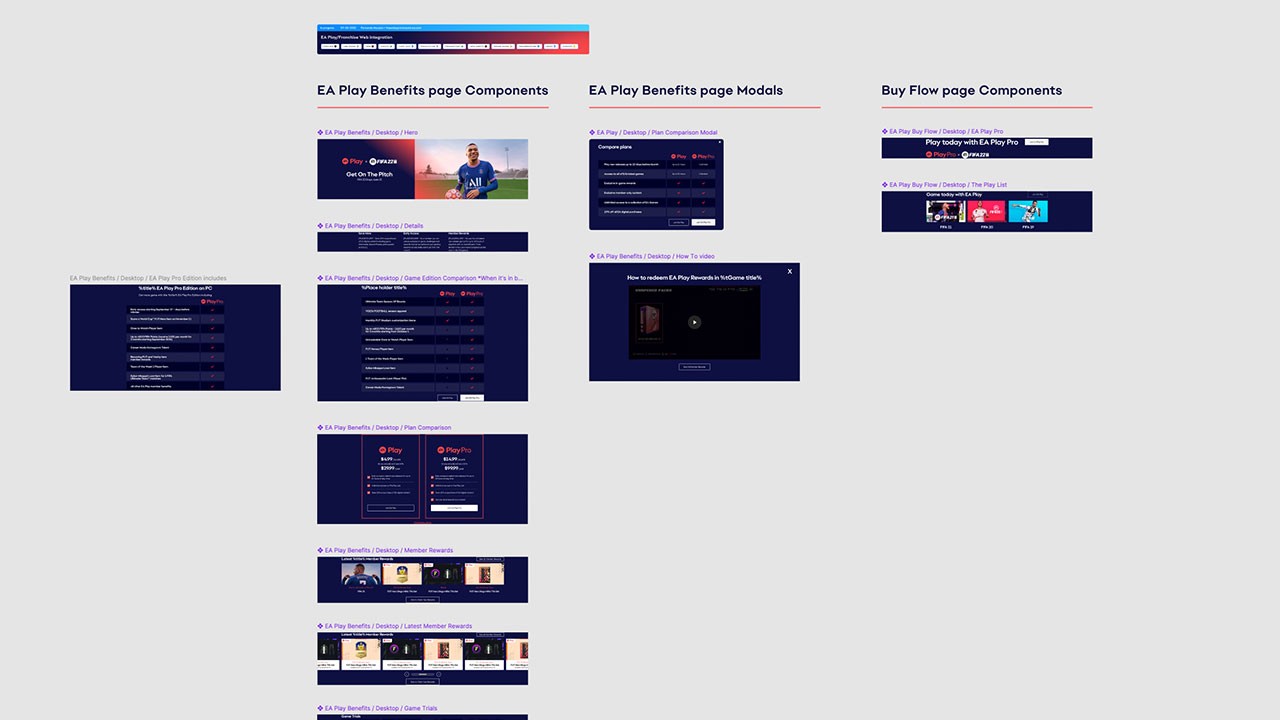
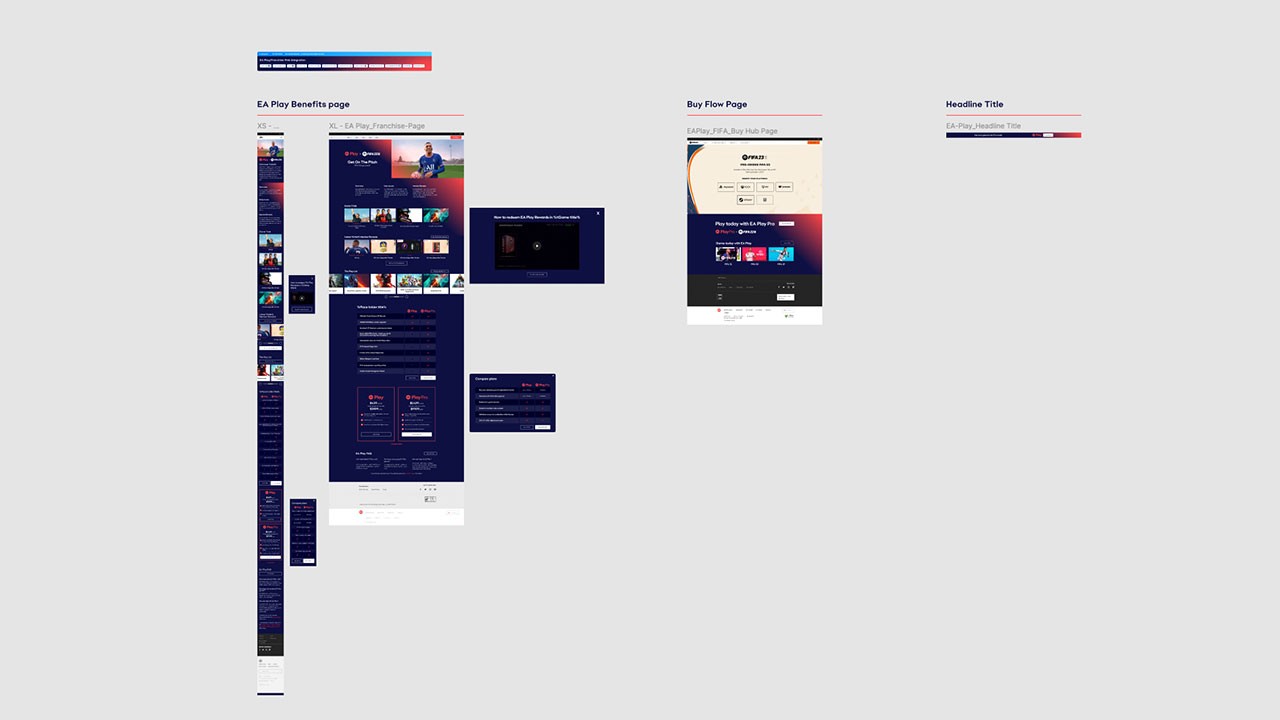
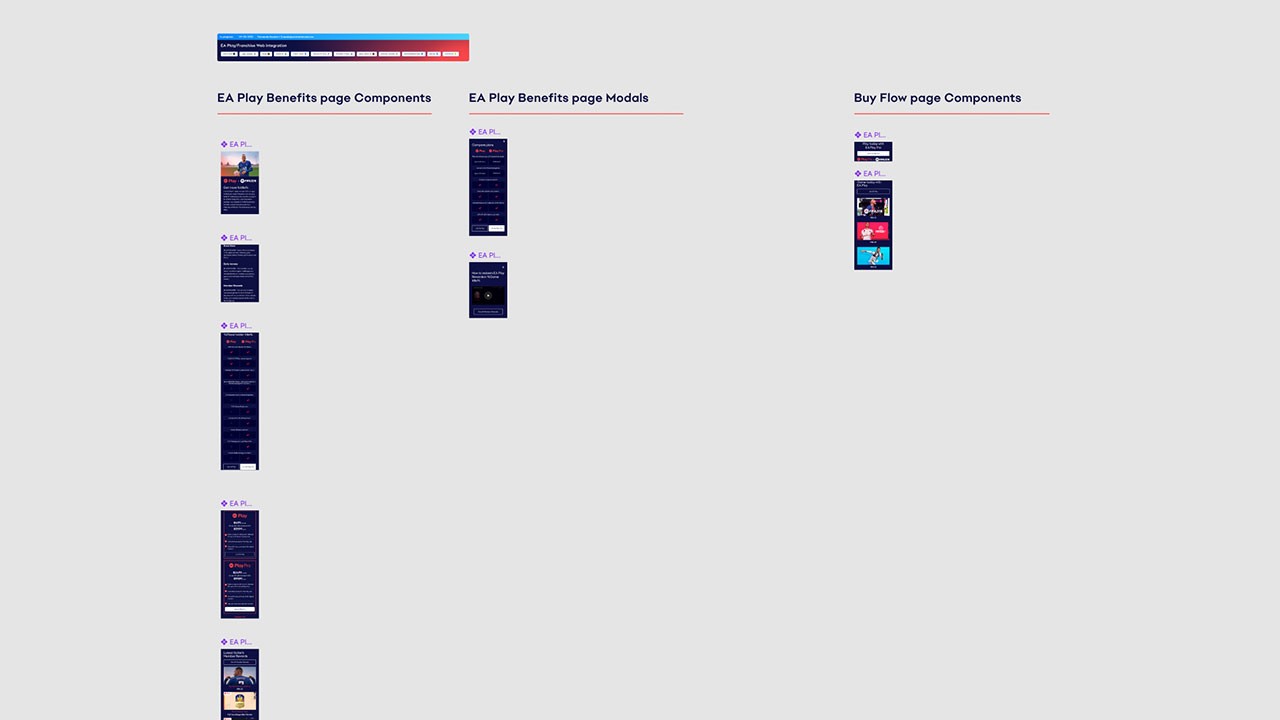
Designing the system
A modular UX framework built under real-world constraints — balancing scalability, consistency, and technical feasibility across franchises and lifecycle states.
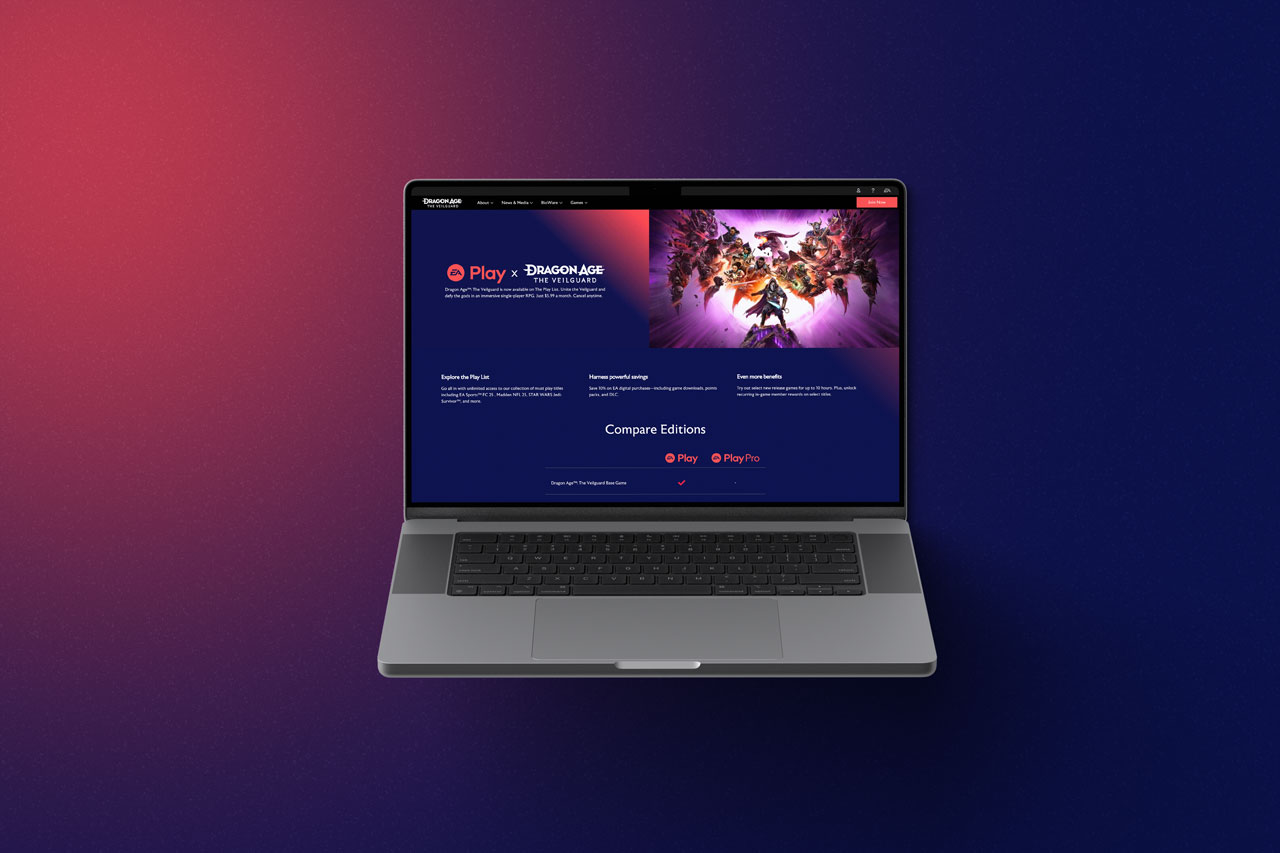
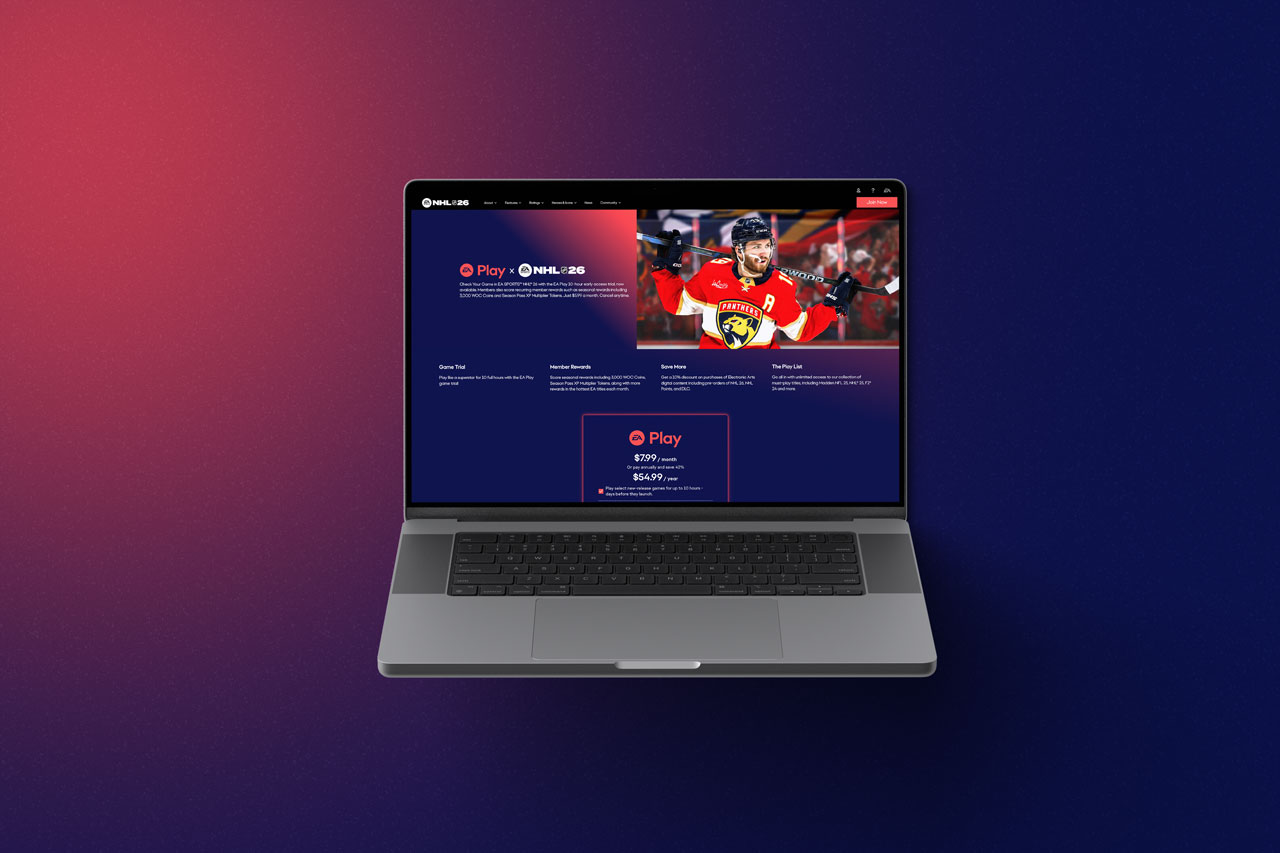
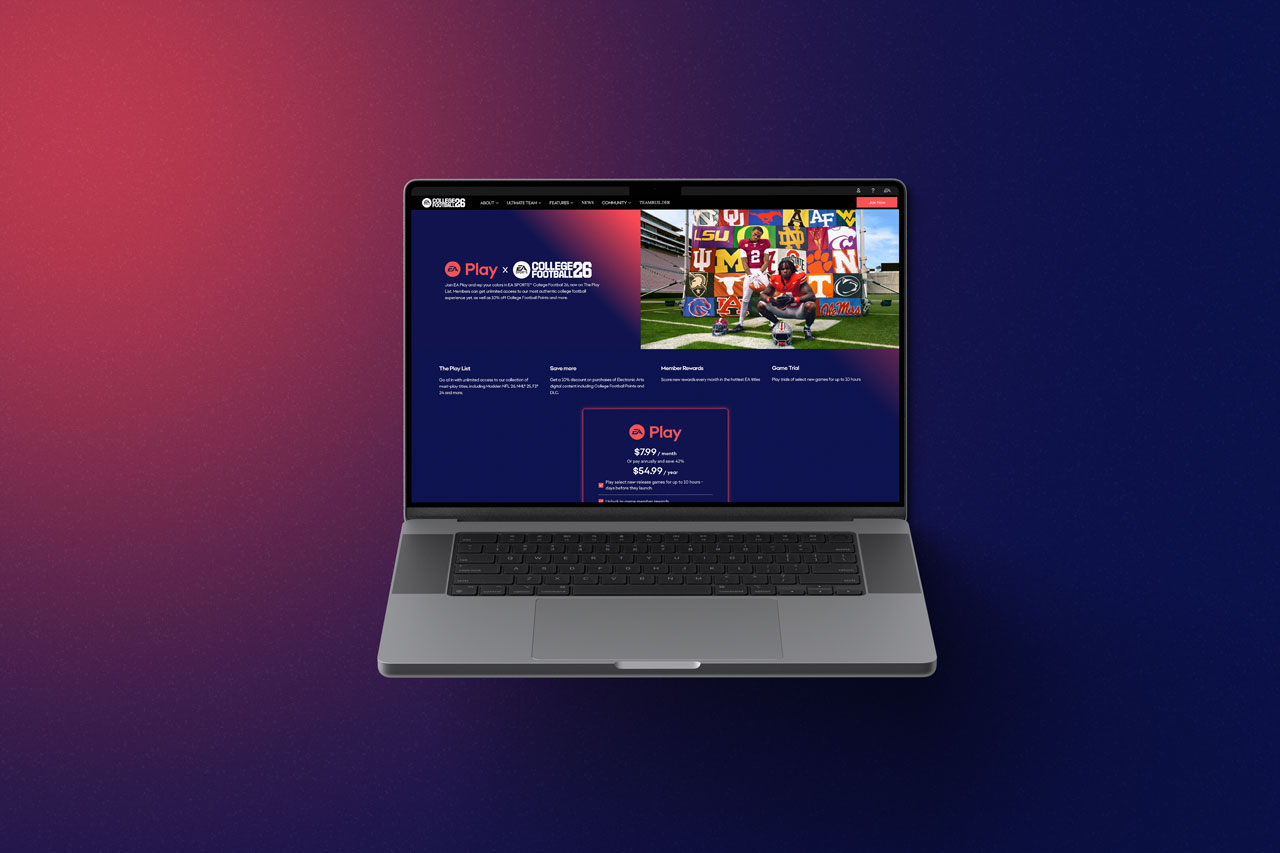
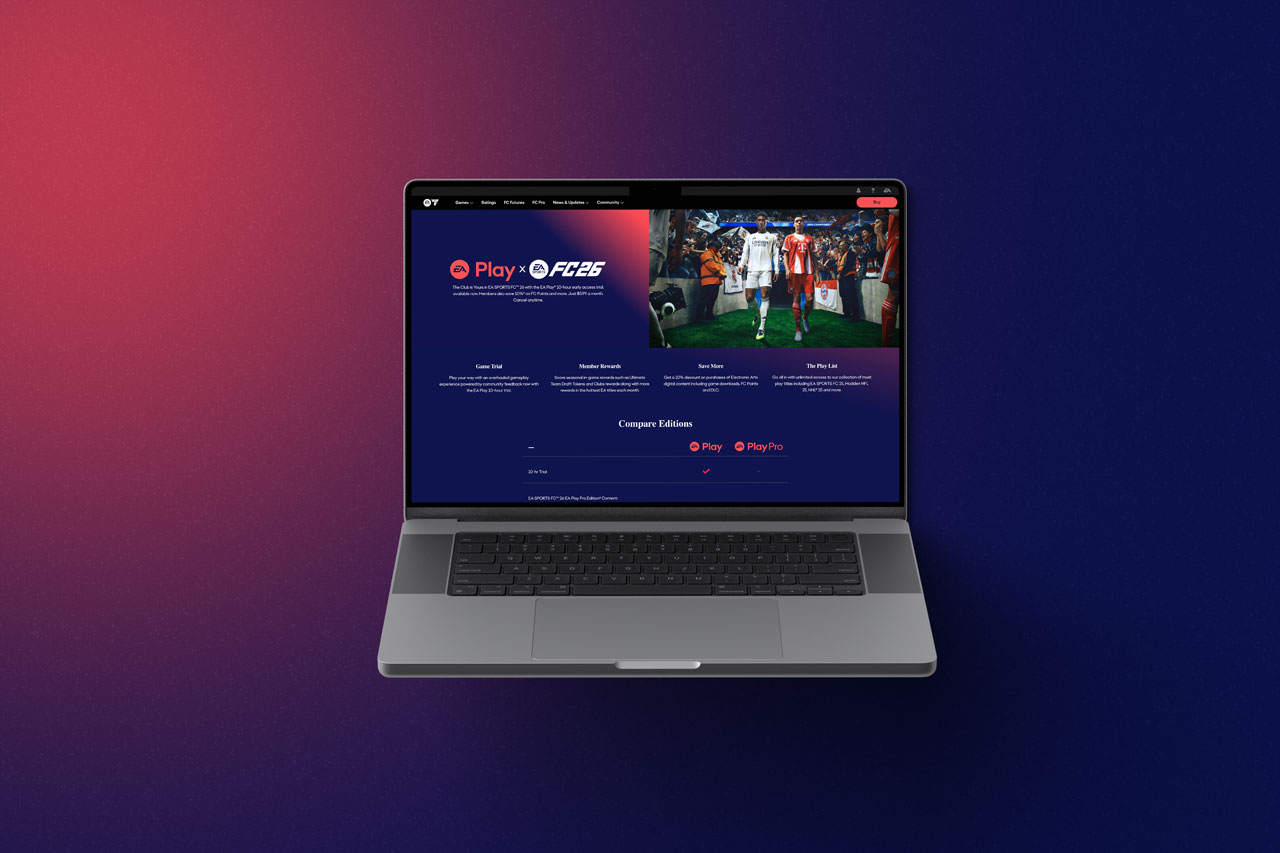
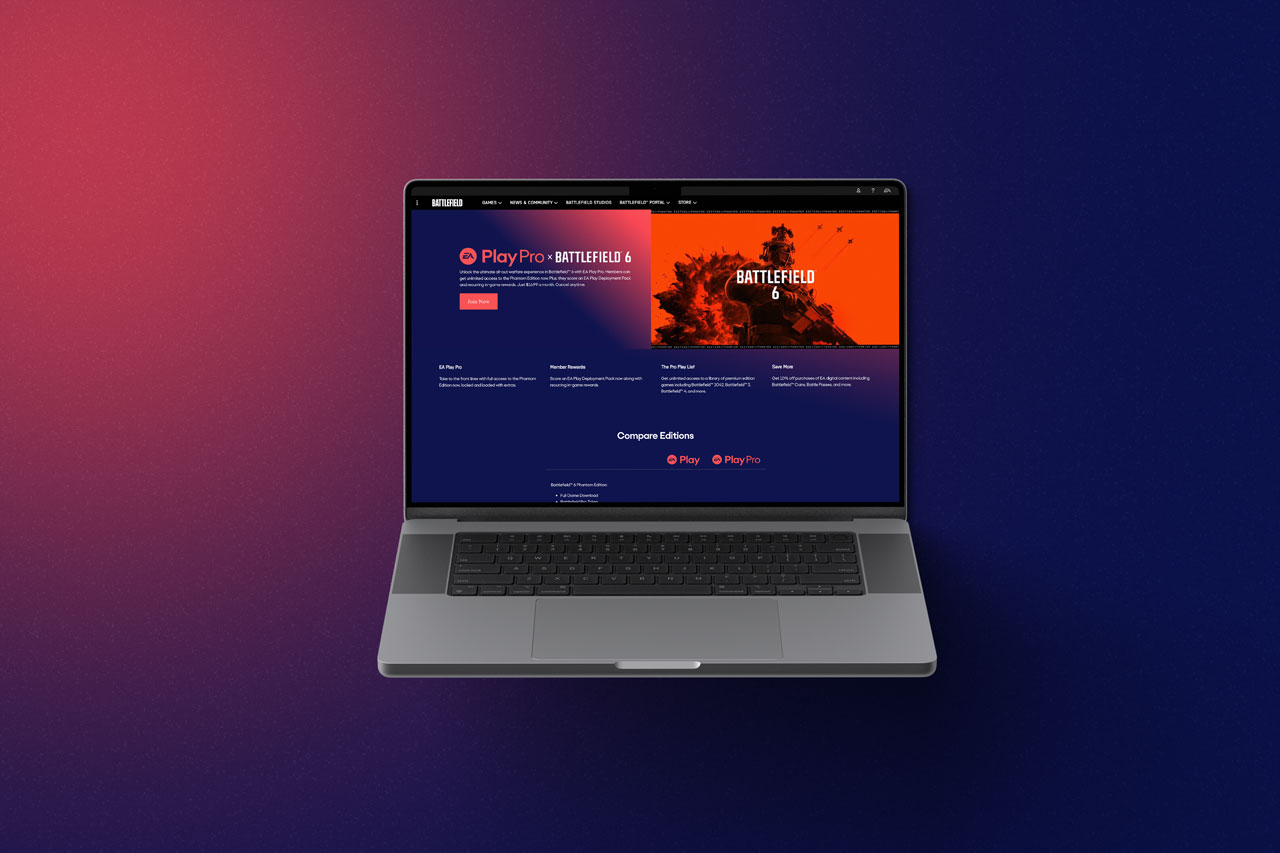
Scaled across the ecosystem
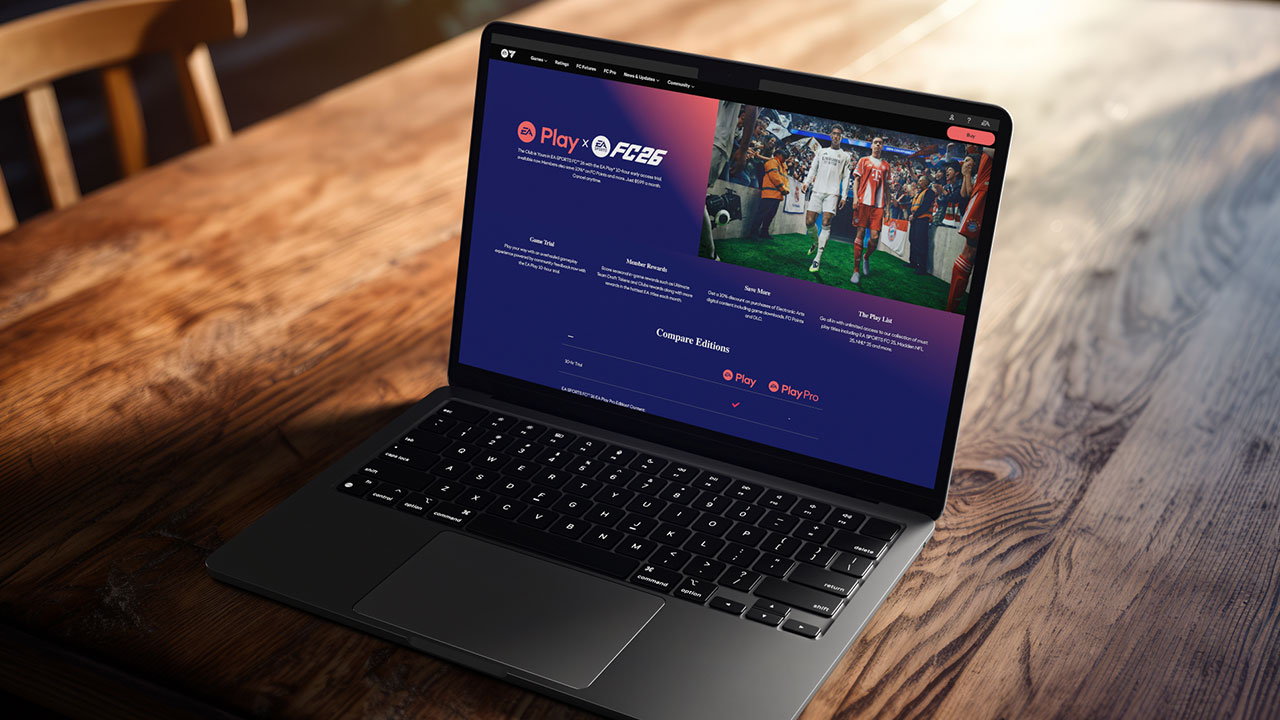
A unified EA Play integration deployed across multiple franchise pages, standardizing subscription messaging while preserving flexibility across titles and regions.
Reflection and impact
This project operated under tight timelines, CMS limitations, and a complex multi-franchise ecosystem. Instead of treating these as blockers, I treated them as design inputs that clarified priorities. Every decision needed to scale across entry points, teams, and future initiatives. Without increasing maintenance burden. The key trade-off was prioritizing system durability over edge-case customization. By choosing modular components and clear experience principles over one-off optimizations, I created long-term alignment and reuse across franchises. Owning both UX and implementation sharpened decision-making and reduced rework. The result was a unified EA Play integration system that shipped broadly, reduced operational friction, and delivered clearer value communication for players evaluating subscription options. It reinforced a principle I carry forward: designing resilient systems under constraint is where strategic design leadership has the greatest impact.