Wild Hearts: designing a global launch ecosystem for a new AAA IP

~3mo
Zero to launch
Announce, Pre-Order, and Launch phases shipped in sequence.
0
Markets supported
Localization-ready templates built for text expansion from day one.
0
Campaign phases
Announce → Pre-Order → Launch, without re-architecting between them.
Design → code
Self-implemented
Production HTML/CSS/JS built directly in AEM, no dev handoff.
The 30-Second Version
A quick note before you keep scrolling
Wild Hearts had zero built in audience and needed to earn trust quickly, drive pre orders across 15 plus markets, and absorb weekly content drops without slowing down. I designed the information architecture and reusable component system, then hand coded the production front end directly in AEM. This modular foundation successfully scaled through Announce, Pre-Order, and Launch without requiring a single page rebuild.
I Owned
- UX strategy & narrative structure
- Hub-and-spoke information architecture
- Component & template system design
- Production front end - HTML/CSS/JS in AEM
Built Alongside
- Producers & Brand - Kemono & Karakuri accuracy
- Marketing & Community: campaign sequencing
From teaser to player hub
A brand-new IP with no built-in audience.
Wild Hearts is an EA Originals title set in a world shaped by Japanese mythology, built around Kemono battles and the Karakuri crafting system. With no franchise recognition to lean on, the website carried unusual weight: it was where players would form a first impression, decide whether to pre-order, and keep returning across the campaign. It had to introduce an unfamiliar world, prove the game was worth trusting against established competitors, and scale across regions and languages, all inside a three-month window.
The challenge & strategic choices
Every constraint on this project pulled priorities in opposite directions. Here is how design strategy balanced speed, scale, and immersion:
Designing for three audiences
Every navigation and content decision had to serve people with different goals on the same page.
Kenji
Wants systems depth and proof this game is different from what he's already played. Drove the feature pathways and deeper content hubs.
Lila
Needs to understand the game fast, without prior genre knowledge. Drove the simplified navigation and a scannable page hierarchy.
Media Writer
Needs fast access to assets and facts on a deadline. Drove the modular layouts and a dedicated News & Media section.
From concept to comprehensive hub
Research, exploration, and delivery didn't happen once. They repeated with every new campaign beat.
Triangulating without formal player interviews
With limited runway, there was no time for a formal research phase. I leaned on competitive analysis of hunting and ARPG sites, stakeholder and studio insight, and player sentiment patterns from comparable titles to anticipate what visitors would look for first.

From wireframe to high fidelity
Layout and hierarchy were locked in low fidelity before any color, image, or typography decision, so early critique stayed focused on structure, not polish. Drag the divider to see the same hero layout move from wireframe to shippable design.


Phased evolution
Countdown → reveal → pre-order hub → full launch ecosystem. The same IA scaled up without a rebuild between phases.


IA & navigation system
A hub-and-spoke architecture routes players into Karakuri, Kemono, and Lore pathways, with News & Media built as a content engine that could absorb weekly updates without a redesign.


Conversion flows & feature storytelling
A buy hub spanning five platforms, built with progressive-disclosure modules so new feature assets could slot in as they arrived, without touching the surrounding layout.


Thanks for taking the time to explore this case study ✨
Different worlds, same instincts.
A quick look at how that same problem-solving shows up across AAA games, SaaS, and marketing.
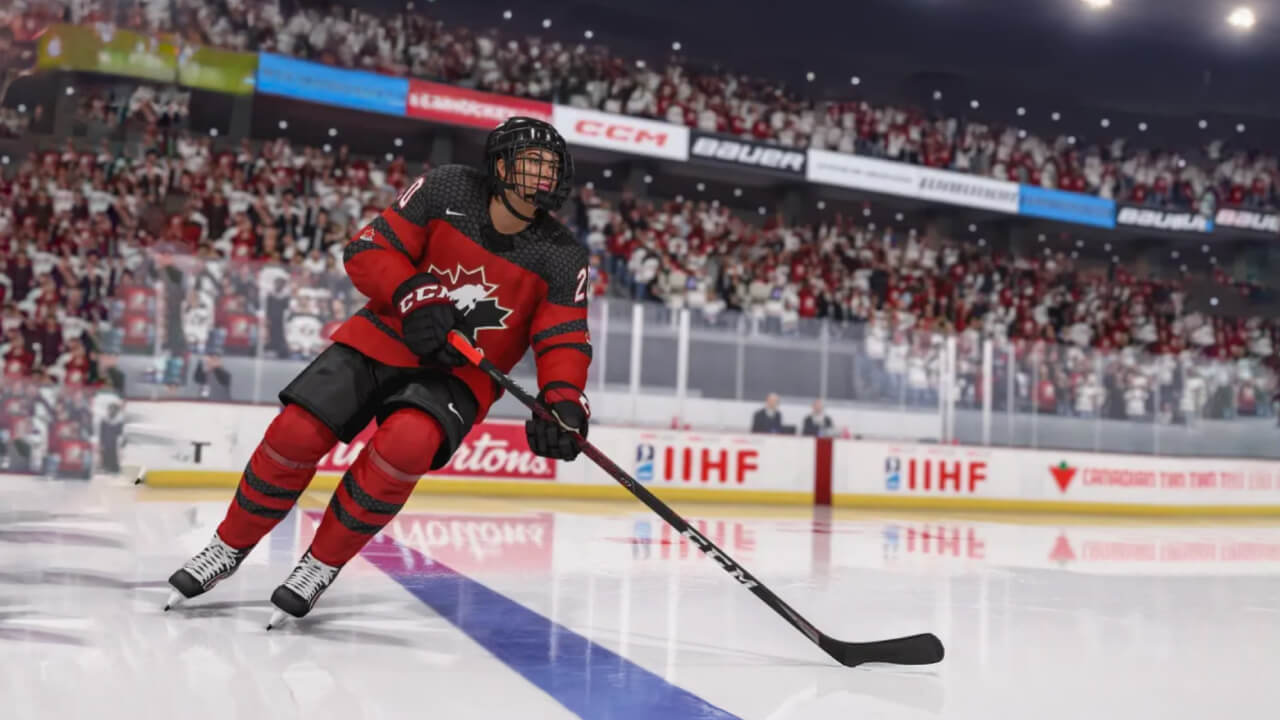
NHL Live Ops
Rebuilt a Photoshop-based content pipeline into a Figma system for daily/biweekly live-service drops, cutting turnaround and errors.
Read case study
ProtoPie's Website Redesign
Led UX and visual design for the marketing site rebuild in Framer, unifying a fragmented component system.
Read case study
Gears of War Esports
Graphic and motion design for in-game events, challenges, and cosmetic drops.
Read case study